
Chino Hills Address History Sources
A past-residents search needs an era map before it needs more names. For Chino Hills previous residents, current parcel data gives the APN and legal location. The recorder gives indexed parties from 1925 forward. Historical directories, census records, Great Registers, probate, and the Sanborn map reach into earlier periods, but their geography may say Chino rather than Chino Hills. The table keeps the coverage and evidence type visible.
| Source | Years it covers | Where held | What it shows |
|---|---|---|---|
| Recorder party index | 1925-present | San Bernardino County ARC | Grantor, grantee, document type, number, date |
| Assessment rolls | 1978-present historical link | ARC Parcel Access | Assessment identity, value, parcel facts, not occupants |
| Regional directories | 1931 and 1934 verified; Chino editions identified 1928 and 1940 | NARA list and licensed genealogy collections | Householder, address, occupation, dated snapshot |
| Federal census | Decennial through 1950 public | NARA, FamilySearch, libraries | Household members, relationships, age, residence |
| Great Registers | 1866-1908 | County Historical Archives | Registered person and possible identity details |
| Probate | 1853-1926 archive; later Superior Court | County archive and court | Decedent, heirs, estate, property trail |
| Sanborn map | 1895 | Library of Congress | Old Chino footprints and use, not modern hills parcels |
The source with the right year is not always the source with the right fact. A recorder image can establish a transfer. A directory can suggest a householder. A census can show a household on a census date. Use the evidence type that matches the claim.
Chino Hills APN Before Street Name
Begin a previous-residents search in ARC Parcel Access. Search the current address or APN, select the polygon, and save the APN, situs, assessment name, mailing clue, characteristics, and subdivision or legal-description hints. The APN is the stable bridge when a street was rural, renamed, renumbered, or filed under a community heading.
Chino Hills incorporated on December 1, 1991. Before then, records may use Chino, Carbon Canyon, Los Serranos, Sleepy Hollow, or another county description. Do not assume that a modern street number existed in an older directory. Match the lot, tract, map, or legal description first. The Chino Hills street directory method handles current address-keyed records; the backward trail begins with the same parcel.
Note: A present street label is a useful search key, but the APN and legal description protect the history from a false address match.
Walking the Chino Hills Deed Chain
The recorder’s online index is party based. It does not answer an ownership-by-address question on its own. Resolve the address to an APN, then search the current assessment name as a grantee. Narrow by approximate acquisition date and document type. Read or order the deed and match the legal description. The named grantor is the next lead for an earlier transfer.
- Record the current APN, situs, assessment name, and subdivision or legal-description clues.
- Search the owner as grantee in the San Bernardino County recorder index from the likely purchase period.
- Verify the resulting deed against APN, legal description, date, and parcel geography.
- Search the deed’s grantor as an earlier grantee, repeating the match for each step backward.
- When the online index reaches its cutoff, ask ARC or the archive about counter, book, microfilm, or staff routes.
- Grantor
- The party shown as transferring or giving an interest in a recorded instrument.
- Grantee
- The party shown as receiving an interest in that instrument.
- Chain of title
- The linked sequence of recorded transfers used to follow ownership of one parcel.
- Legal description
- The recorded land description that identifies the parcel beyond a street label.
Do not accept the first same-name result. A person, trust, or company may appear in several transactions. Every link needs a parcel match.
The Chino Hills 1925 Cutoff
The ARC recorder index begins in 1925. That date is an online index cutoff, not the beginning of all San Bernardino County deeds. Recorded images are not remotely displayed. Researchers inspect images at the Hall of Records or High Desert Government Center, or order copies. The July 1, 2026 schedule lists $4 for the first recorded-document page and $1.50 for each later page, plus certification, mail, and online-card charges.
Earlier ownership work needs a change of channel. Ask ARC about historical deed books or microfilm and ask the County Historical Archives about material that relates to probate or older county records. No exact earlier book coverage was published in the research. A blank web result is therefore not evidence that the property had no earlier owner.
The three useful digital cutoffs are different: recorder index metadata from 1925, historical assessment rolls from 1978, and court data limited before 1998. Each tells the researcher when to switch sources.
Ownership and Occupancy in Chino Hills
A deed chain follows ownership. It does not follow every person who occupied a building. The assessor name is tied to assessment administration, and the mailing address may be elsewhere. A directory householder is a dated publisher entry. A census household is counted at a particular enumeration. A permit names project participants. Treat those records as separate layers when tracing Chino Hills previous residents.
Use a dated directory or census entry to test who was associated with the address, then use deeds and probate to understand the property. A matching name and street is not enough when a common surname, spouse, or community label is involved. Keep the source title, year, page, APN, and legal description in the notes.
Chino Directories Around Census Years
Chino Hills previous residents can appear in Chino or a regional directory because the city name came later. Verified regional volumes include 1931 and 1934. Chino editions from 1928 and 1940 are identified in established catalogs, with the exact edition imprint and scan still requiring confirmation. Pair a directory year with the nearest public census, then follow the name in the next two or three editions. This is often the best way to add previous residents to a property timeline without guessing.
Copy the entry exactly. Note address, occupation, spouse mark, householder or residence mark, and any publisher abbreviation. A criss-cross section may show the address first. If the person disappears, test a move, death, publisher gap, rural-route change, obituary, probate record, or later deed. The complete collection belongs to the city directory trail, while the house-history question uses only the entries that match the parcel.
Chino Hills Building History
Finalized building permits can date construction, remodels, inspections, and named project roles. Chino Hills Building and Safety says copies must be requested as public records. Name one address or APN, a date range, and finalized permits or inspections. Returned files may include project address, owner or applicant, contractor, scope, issue and final dates, and inspection status.
A permit dates work on a building. It does not prove that the named person lived at the site or that the same household stayed through the full project. Code enforcement files may have active-investigation or privacy limits. Ask for closed or releasable logs instead of assuming every case is online.
Chino Hills Archives and Probate
For an event certificate, use the county vital-records route and verify the current ARC fee schedule.
San Bernardino County Historical Archives holds probate proceedings from 1853 through 1926 and Great Registers from 1866 through 1908. The archive building was closed during the 2026 inspection, with staff directing questions to ARC-DLRecArchive@arc.sbcounty.gov and 909-387-1001. Probate can connect a deceased owner to spouses, children, heirs, administrator, debts, distribution, and property, giving previous residents research a family trail beyond the deed.
Great Registers can add occupation, age, height, physical description, and naturalization status, depending on the year. They are historical identity sources, not a current Chino Hills previous-residents list. County vital indexes are confidential under Health and Safety Code section 102230. Ask for the permitted record or certificate route rather than expecting an open index.
The 1895 Chino Map Boundary
The Library of Congress Sanborn map source is the verified route to the four-sheet 1895 Chino set.
The Library of Congress holds a free, four-sheet Sanborn Fire Insurance Map of Chino from February 1895. It describes the old town of Chino, not the later Chino Hills subdivisions. That makes it useful for records geography and old-town context, but not for proving that a modern hill address existed or that a family lived on the parcel.
When a family source says Chino, compare the map’s place with the directory publisher, census enumeration, deed description, and later subdivision map. The map can explain why historic records cluster outside the current city line. It cannot repair an address mismatch by itself.
Custody Records Are Not House History
Custody locators can answer a narrow question about a booking or incarceration record, but they do not prove that a person once lived at a Chino Hills address. The San Bernardino County Sheriff locator covers current county custody and links to visit information. The Federal Bureau of Prisons locator uses a name or federal identifier and mainly covers 1982 forward. California’s CDCR locator is another state route. Identity and displayed disclaimers still matter.
The San Bernardino County inmate locator captured for this previous-residents page is a custody source, not a property source.
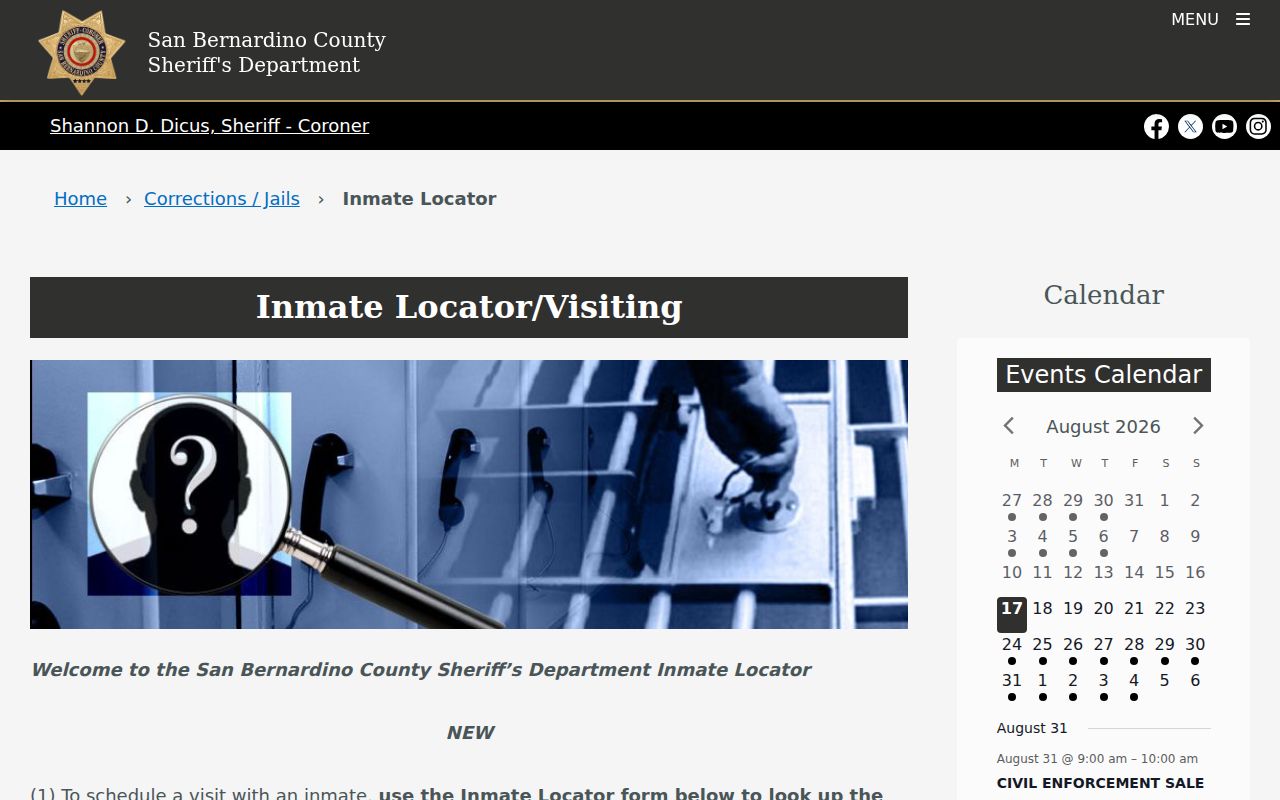
The county tool belongs in a separate custody check and should not be mixed into a deed or household timeline.
The federal route is also separate. The Federal Bureau of Prisons inmate locator allows BOP, DCDC, FBI, or INS number searches and name, race, sex, or age modes for its displayed coverage.
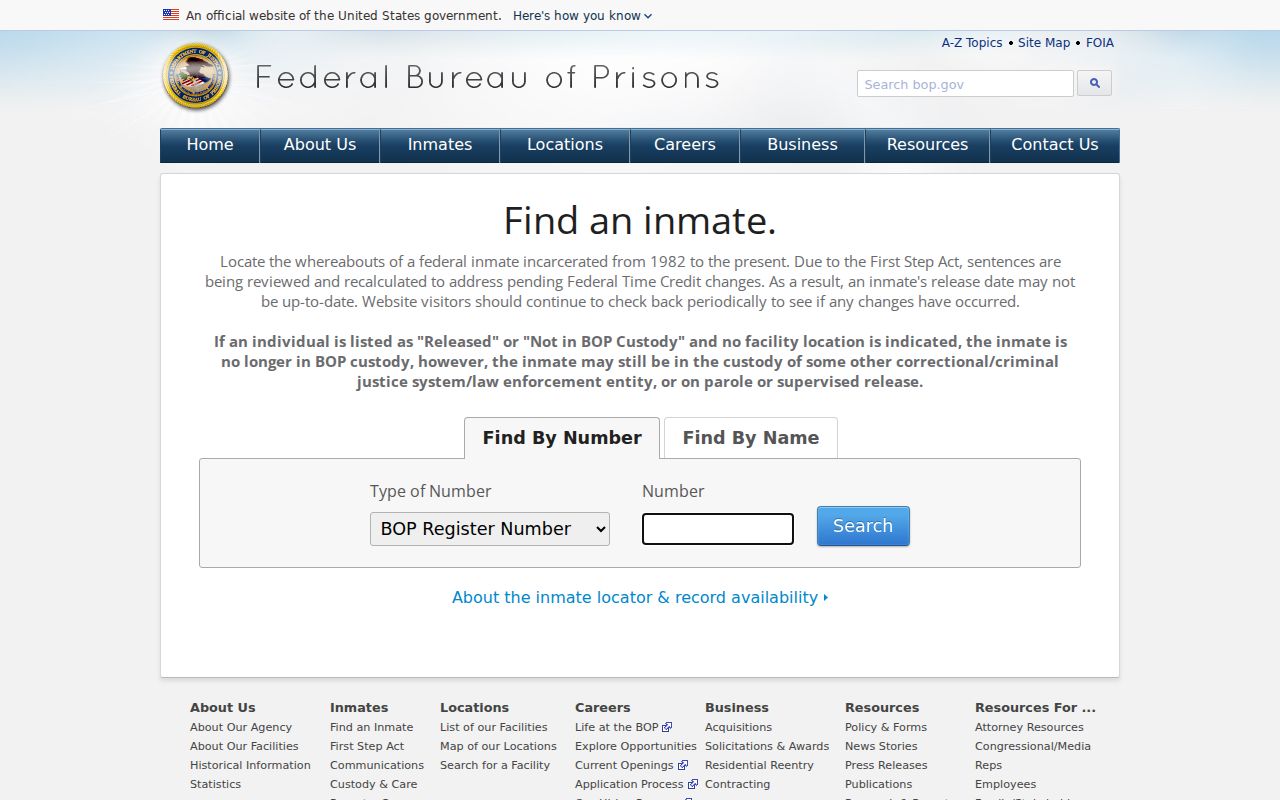
A custody record can be dated and verified, but it is not evidence that a person occupied a particular Chino Hills house.
Past Chino Hills Households
The household layer belongs after the parcel and deed work. Pair a directory entry with the nearest census, then use an obituary or probate record when a person disappears. A deed may show that a property changed hands while a directory shows a householder. A census may show relationships on one date. None alone explains every year.
Use a process trail: current APN, recorded deed, earlier grantor, matching directory address, census household, and probate or obituary endpoint. Stop when the evidence stops. Do not fill a gap with a same-name result from an unrelated city or with a modern address inferred from an old directory.
House-history use. Chino Hills previous residents research is appropriate for genealogy, a property’s documented past, and personal history. Do not use an old address trail to track, harass, or intimidate a living person.