
Tracing a Chino Hills Street
A careful street directory search is a chain, not a bulk list. The county assessor map locates the parcel. The APN keeps nearby lots apart. The recorder index names parties to recorded instruments. A voter status tool works only for the voter’s own identity check. A reverse or criss-cross directory may show a past householder when a regional volume includes the place. The result is strongest when the same parcel, name, and time appear in more than one source.
Use this order for one address. It protects against the most common error, which is taking an assessment name as proof that a person lives at the situs. Keep a note of every identifier before moving to the next desk.
- Enter the address or APN in San Bernardino County Assessor Parcel Access and save the APN, situs, assessment name, and mailing clue.
- Pan along the block in the parcel map and open each polygon separately rather than assuming a street name identifies one lot.
- Search the assessment name as a grantee in the recorder index, then match the deed to the APN or legal description.
- Use a focused city permit request, a public court file, or the voter’s own status check only when that source fits the question.
- For past households, check regional Chino directory volumes and census years, then use probate or an obituary as a possible endpoint.
Chino Hills Address Records
Several Chino Hills record sets can be keyed to a street address, but they do not have equal reach. Parcel Access is free and map based. The recorder index is name and document based, with coverage from 1925 forward. City Building and Safety keeps finalized permit files that must be requested. Court filings may contain an address when the filed document is public and unredacted. Historic directories offer a dated household clue only when a local or regional volume includes that street.
| Record set | Keeper | What it shows | Access |
|---|---|---|---|
| Assessment parcel | San Bernardino County ARC | APN, situs, assessment name, mailing clue, values, characteristics | Free Parcel Access map |
| GIS parcel and district map | County and City of Chino Hills | Lots, zoning, land use, schools, CFDs, streets, context | Free map or PDF |
| Deeds and liens | San Bernardino County Recorder | Recorded parties, document date, title, number, legal property terms | Free index; image counter or paid copy |
| Finalized permit | Chino Hills Building and Safety | Project address, applicant, contractor, scope, issue and inspection dates | Focused public-record request |
| Historic directory | Library or genealogy collection | Householder, occupation, address, and a dated snapshot | Holdings and access must be verified |
The APN is the link between these sets. A street string can be shortened, renamed, or used for more than one unit. A legal description and parcel geometry are better controls than a name match alone. A street directory can organize the trail, but it cannot turn separate custodians into one master roll.
Note: The county’s map and the recorder’s index answer different questions, even when both display a name tied to one Chino Hills address.
Chino Hills Parcel Access
Open Assessor Parcel Access before searching the deed index. Search by address or APN, select the parcel, and save the fields that identify the land. The public page does not advertise an unrestricted owner-name batch query or a special query service. It is designed for parcel inspection. Historical assessment rolls reach back to 1978, which is useful for valuation and assessment history but does not create a full occupant archive.
Parcel controls documented in the research are simple. An address or location route finds the situs. An APN route finds the exact assessment parcel. Zoom and pan let a researcher move along a block. A polygon click opens details. A layer or basemap choice adds available context. The live GIS product can change, so do not describe a radius or buffer tool unless the current viewer visibly supplies one.
| Portal control | Type | Required | Function |
|---|---|---|---|
| Address search | Text or autocomplete | One search route | Locates a situs or geocoded point |
| APN search | Text | Alternative | Locates the exact assessment parcel |
| Zoom and pan | Map controls | No | Moves along a street or block |
| Parcel polygon click | Map selection | No | Opens parcel details |
| Basemap or layers | Map choice | No | Toggles available boundary or context layers |
| PDF map links | Link list | No | Opens zoning, land-use, school, CFD, or street-sweeping maps |
Save the parcel card before copying a person’s name. The assessor identifies assessment administration. ARC warns that its information is not a legal determination of ownership or permitted use. That caution matters when a Chino Hills street directory result is being used for family research or property history.
Situs and Mailing in Chino Hills
A situs address is where the parcel is located. A mailing address is where an assessment notice or other correspondence goes. They may match, but they often answer different questions. A mismatch can suggest an alternate mail location or an owner who is not at the parcel. It cannot prove where someone lives. Trusts, entities, multiple owners, and substitute addresses make the assessment name even less like a household list.
A legal description identifies the land through a tract and lot, parcel map, or metes-and-bounds language. A plat is a map or recorded plan that lays out lots, streets, and boundaries. A parcel is the mapped unit used for assessment. These terms matter when two street numbers look alike or when an older record uses a community name that predates the modern city.
- Parcel
- A mapped unit of land identified by an APN and used in assessment records.
- Situs address
- The location of the land or improvement, distinct from where mail is sent.
- Plat
- A recorded map that lays out a subdivision, lot, street, or boundary pattern.
- Criss-cross directory
- An address-to-name section that can turn a street location into a dated householder clue.
Note: A matching mailing and situs address supports a lead, but it does not turn an owner record into proof of residency.
Chino Hills GIS Street Layers
Chino Hills GIS maps add the place around a parcel. The city lists zoning, general-plan and land-use maps, school locations, civic facilities, community facilities districts, and street-sweeping products. These layers can explain why two nearby parcels fall in different districts or why a community name appears in a record. They do not supply a public list of residents.
Chino Hills has an unusual mapping timeline. Water Works District 8 created a need for mapping in 1985. County GIMS produced base maps. After incorporation, the city went without GIS from 1993 through 1995, then restored it in 1996. A request for an old street or boundary should therefore name the time period and agency. Earlier material may be a county or water-district paper map, not a city web layer.
Use the city map for context, the county parcel map for APN control, and the recorder instrument for the legal property description. That three-part sequence is more reliable than reading a neighborhood label as a boundary.
Chino Hills Deed Chain
The recorder index does not accept “who owns this address?” as a direct search. First resolve the address to an APN. Then search the assessment name as a grantee and narrow by an approximate acquisition date and document type. Read the resulting deed or order a copy. Match the APN, legal description, and parcel facts. If the deed names a grantor, search that grantor as an earlier grantee to move backward.
Every same-name result needs its own match. A seller can own more than one parcel. A company, trust, or substitute mailing address can stand between a record and a person. The index begins in 1925, while older deeds require a counter or archive inquiry. The current fee schedule lists $4 for the first recorded page and $1.50 for each later page, with additional charges for certification and mail.
The ARC public-access disclaimer explains the index’s catalogue role and advises searchers to try spelling variations. That small step is useful when a surname, company name, or initial was entered differently.
This is the heart of a by-address street directory search when the goal is ownership history. It is not a way to identify every occupant. A deed records a transfer, not a continuous household.
Chino Hills Permit Records
Chino Hills Building and Safety says copies of finalized building permits must be requested as public records. A focused request can name one address or APN, a date range, and the desired permit or inspection record. Returned files may identify an owner, applicant, contractor, project scope, issue date, final date, and inspection history. Those names date work on a building. They do not prove that a named person lived there.
Code enforcement has added privacy and active-investigation limits. Ask for closed or releasable case logs instead of assuming a live public database exists. The City Clerk’s public-record channel is the right route for identifiable city records. State the address, APN, department, record type, and date range. Do not ask for everything about a street.
The city’s Building and Safety instructions are the source for the finalized-permit request route. Confirm the current department process before sending a request.
The public-record request approach is also useful for a focused Sheriff report request. It keeps the request tied to a place and event rather than turning a Chino Hills street directory into a personal dossier.
Reading Chino Hills Street History
Historic reverse or criss-cross pages can add a household clue that modern parcel files cannot. Verified regional directory volumes include Chino in 1931 and 1934. Established catalogs identify Chino editions from 1928 and 1940 as well. Exact Chino Hills shelf years were not published by the official library page, so ask the James S. Thalman Chino Hills Branch at 909-590-5380 about Chino, Ontario-Upland-Chino, Pomona-area, telephone, yearbook, and newspaper holdings.
A directory entry may include a surname, given name or initial, spouse in parentheses, occupation, householder mark, rooming or residence mark, and street address. The abbreviation key in the front matter controls the meaning. If a criss-cross section is present, search the address and then compare the name page. The same entry remains a snapshot, not a deed, voter file, or complete household list.
A past household question belongs with the Chino Hills city directory collections rather than the current street record chain. That separation keeps old shelf evidence from being mistaken for a current address claim.
Older Chino Hills Street Names
Chino Hills did not exist as an incorporated city before December 1, 1991. Older records may use Chino, Carbon Canyon, Los Serranos, Sleepy Hollow, rural routes, or another community heading. A modern street search can fail even when the older source is correct. Search the wider place terms, then match the old address to a tract, lot, APN, legal description, or map.
No official comprehensive street-renumbering concordance was located. Do not invent a conversion between an old number and a current one. For a specific mismatch, request subdivision or tract maps, street-name resolutions, and addressing records from City Clerk or Engineering. Directory front matter may also explain rural-route changes or publisher geography.
Note: A community name in a pre-1991 source can be a better geographic clue than the modern city name, but it still needs parcel confirmation.
Chino Hills Court and Sheriff Files
A public court filing can contain a party address when the document is unredacted, but remote access and copy rules vary. California Courts explains online, counter, and mail copy routes, with standard copies commonly priced at $0.50 per page and certification at $40 per document. A court result remains a case clue. It does not prove current residence or identity. Older county cases may require the appropriate district clerk.
The California court-copy guidance captured for this street directory shows the fallback beyond a screen result. It helps a researcher understand when a street-related record needs a clerk request.
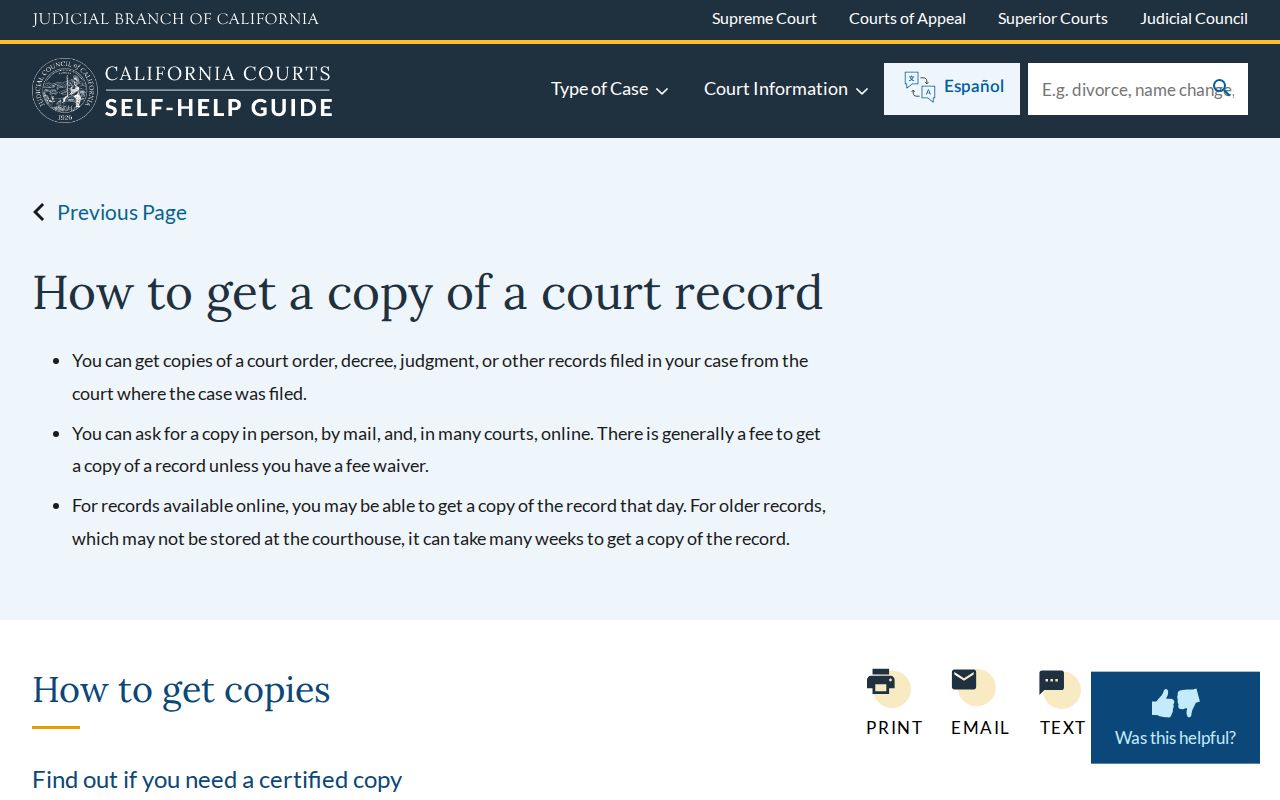
The image is a reminder that a document request and a free case search are different steps, with different access limits.
Chino Hills police service comes from the San Bernardino County Sheriff. A report request can go through the county portal, a station or headquarters, or mail to the Records Division. Restricted reports may require identification or an eligible status. Booking photos are generally not released, and crisis-intervention reports are confidential under Welfare and Institutions Code section 5328.
The Sheriff’s public-records page is the source captured for the local request route. It adds a law-enforcement channel without turning the street directory into a list of private incident details.
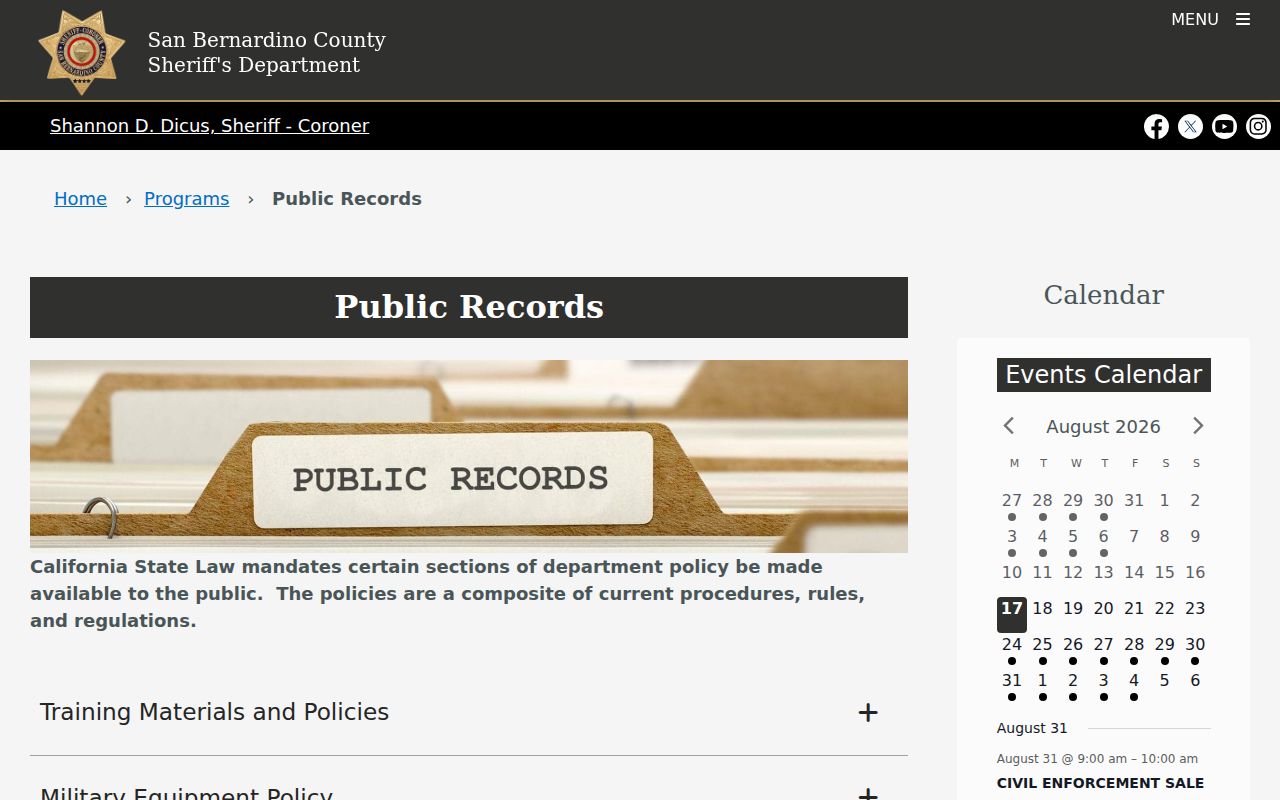
Keep any request tied to an address, incident type, and date range. A focused request is easier for the custodian to review and less likely to seek protected material.
What Chino Hills Streets Cannot Show
A street directory cannot show every person who lives in a home. The assessment roll does not list other occupants, children, guests, or household relationships. The voter file is not a public block browse tool. DMV personal addresses are restricted under the federal DPPA. City utility-customer details are not a public household source. A permit names project participants, not every occupant. A court filing may omit or redact an address.
Commercial neighbor and people-finder compilations can blend old assessment data with other sources and can join the wrong people. They are not substitutes for a certified record, a clerk response, or a direct consent-based introduction. For personal safety, family history, or civic curiosity, use the least revealing source that answers the question.
Lawful use. Chino Hills street and address records support lawful personal research, house history, and civic understanding. Do not use them to stalk, harass, intimidate, or harm anyone.